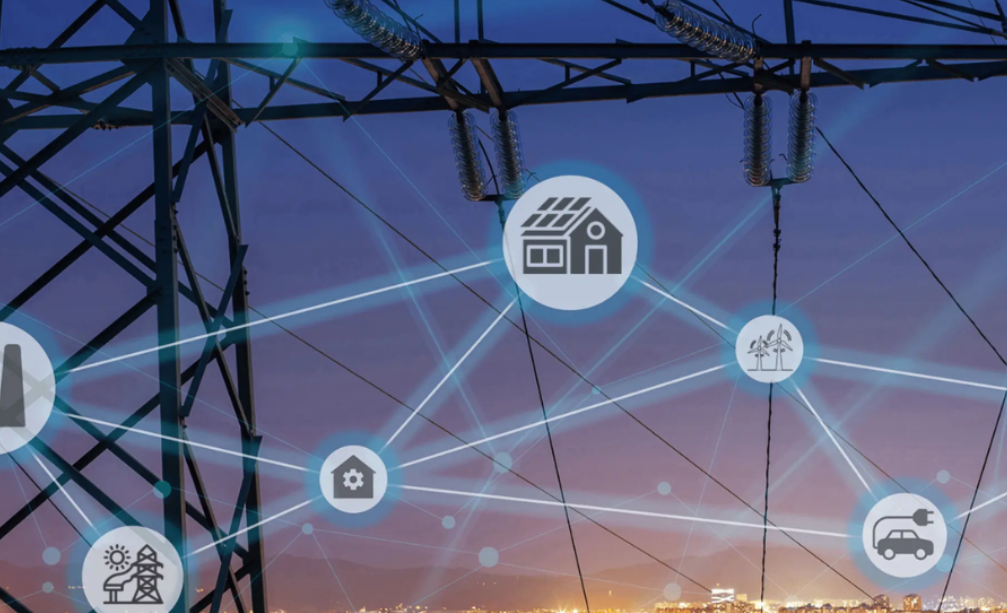
Smart grids integrate sensors, communications, and control to monitor generation, delivery, and consumption in real time. They enable adaptive operation, reduced losses, and data-driven energy management. Energy management translates capabilities into measurable savings, aligning resources with forecasts and providing continuous feedback for optimization. Deployment emphasizes secure, interoperable technologies and modular controls with real-time load balancing. Metrics and governance ensure reliability and scalability, but practical tradeoffs and interoperability challenges remain, inviting further examination of how these systems mature in practice.
What Are Smart Grids and Why They Matter
Smart grids refer to electricity networks that integrate advanced sensors, communications, and control systems to monitor and manage the generation, delivery, and consumption of power in real time.
The approach enables responsive balancing, reduced losses, and adaptive operation.
Smart grids enable data-driven energy management, promoting efficiency, reliability, and autonomy while supporting decentralized generation and flexible demand in an open, evolving energy landscape.
See also: francoistuchel
How Energy Management Realizes Savings and Resilience
Energy management translates smart-grid capabilities into measurable savings and enhanced resilience by aligning generation, storage, and consumption with real-time data.
The approach analyzes continuous feedback to optimize resource use, reduce losses, and defer peak demand.
It enables energy storage integration, enhances grid flexibility, promotes sustainable efficiency, and leverages demand response to stabilize networks amid variable supply and demand, supporting freedom through reliable performance.
Practical Steps to Deploy Home and Small-Business Smart Grids
Practical deployment of home and small-business smart grids builds on prior gains in efficiency and resilience by translating theory into implementable steps.
Systematic integration begins with modular controls, interoperable sensors, and secure communications.
Emphasis on home automation enables real-time load balancing, while demand forecasting informs generation scheduling and storage decisions.
Continuous assessment ensures reliability, scalability, and freedom from overcommitment in evolving energy ecosystems.
Choosing Technology, Partners, and Metrics for Success
What considerations drive the selection of technology, partners, and metrics in smart-grid initiatives, and how do these choices shape overall performance?
The analysis emphasizes objective criteria for technology selection and partner criteria, aligning system architecture with interoperability, security, and scalability.
Metrics quantify reliability and efficiency, guiding governance.
A disciplined, transparent process mitigates risk while enabling flexible integration and measurable, sustainable performance improvements.
Frequently Asked Questions
How Do Smart Grids Affect Electrical Vehicle Charging Patterns?
EV charging demand shifts with time-of-use signals and availability of grid flexibility; smart grids enable load shaping, reducing peak demand, smoothing integration of renewables, and aligning charging with low-cost periods, enhancing system resilience and user freedom.
Can AI Optimize Real-Time Energy Use Across Devices?
AI optimization can manage real time usage across devices, delivering coordinated control. Suspense builds as energy forecasting informs demand response, ensuring resilience. The analysis remains analytical and precise, framing AI optimization within system-focused reliability and freedom-loving operational standards.
What Are Privacy Implications of Smart Grid Data?
Privacy concerns arise from granular consumption revealing habits; data retention policies determine exposure duration and recovery risk. The system emphasizes minimization, encryption, access controls, and auditable workflows to preserve autonomy while enabling analytical insight and user freedom.
How Do Microgrids Differ From Traditional Grids?
Microgrids differ from traditional grids by modular, islandable operation and local control, enabling resilience. Microgrids vs grid topology reflect decentralized architecture, with autonomous substations. These systems enhance reliability while preserving freedom to reconfigure, optimize, and autonomously isolate disturbances.
What Incentives Exist for Residential Smart Meter Adoption?
Residential smart meter adoption is incentivized through income tax incentives and property tax incentives, reflecting a policy focus on cost recovery and value creation; analytically, this fuels system efficiency, private investment, and informed consumer choice for freedom-minded households.
Conclusion
The investigation confirms that smart grids, anchored by real-time sensing and modular controls, yield measurable savings through enhanced forecasting and demand flexibility. A system-centric view reveals that secure, interoperable technology and well-defined governance enable scalable resilience. Practical deployment hinges on clear metrics, robust partnerships, and phased implementation. When home and small-business configurations align with centralized optimization, the resulting rhythm—monitor, respond, adjust—drives continuous improvement, reliability, and energy efficiency across generations and loads.
